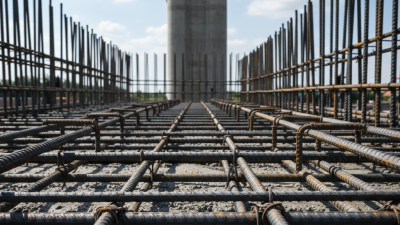
China Top 10 Reinforcement Steel Rebar Suppliers

Choosing reliable suppliers matters when a project depends on consistent bar dimensions, traceable mill records, and delivery dates that hold. Reinforcement Steel Rebar carries tensile forces through concrete, so small differences in grade, diameter, or quality control can affect fabrication and site work. The right supplier is not simply the one offering the lowest quotation. Documentation matters. So does communication when schedules shift.

This guide examines ten Chinese suppliers through practical comparison points, including product range, production capability, certifications, export experience, and customer support. As engineer Theodore von Kármán famously observed, “Scientists study the world as it is; engineers create the world that never has been.” That perspective suits rebar procurement: sound infrastructure begins with careful technical choices. Still, a supplier list cannot replace project-specific checks. Verify current certificates, test reports, specifications, and shipping terms before making a decision. Rankings can simplify a crowded market, but they may miss local strengths or changing conditions. That limitation deserves attention. A brief supplier profile is a starting point, not a guarantee of performance.
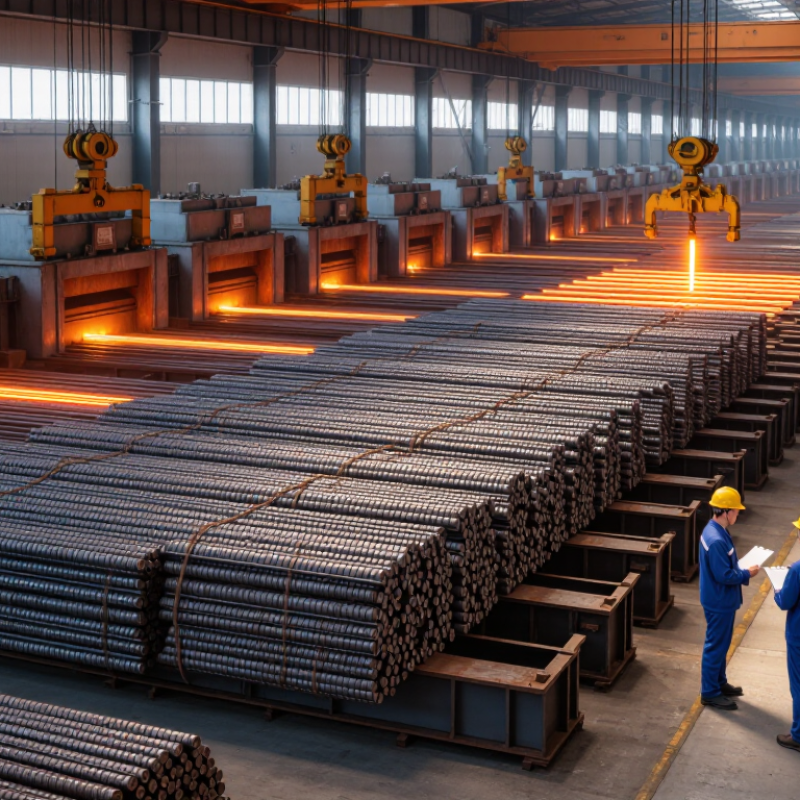
China Top 10 Reinforcement Steel Rebar Suppliers

China’s Steel Context: 1,005.1 Mt of Crude Steel in 2024 (Worldsteel)

China produced 1,005.1 million tonnes of crude steel in 2024, according to Worldsteel. That figure shows the scale of the country’s steel industry. It also provides useful context for buyers comparing reinforcement steel rebar suppliers. But crude steel output is not the same as rebar production. It does not, by itself, confirm a supplier’s available sizes, delivery schedule, or product quality.

For project teams, practical checks matter more than a national production headline. Ask for current mill test certificates, specified grade and dimensions, and confirmation that each shipment matches the purchase order. Compare rib patterns, bar markings, bundle tags, and documents before unloading. Small discrepancies can slow work on site.

Scale matters, but it is not a guarantee.

A large industrial base may offer broad supply options, yet capacity and lead times can vary by region and season. I would treat the 2024 figure as context, not a purchasing shortcut. Buyers still need clear specifications, traceable records, and realistic delivery commitments for each order.

Rebar Grades: HRB400 and HRB500 Yield Strengths Under GB/T 1499.2

For buyers comparing China’s reinforcement steel rebar suppliers, grade numbers are a useful starting point, not a complete quality check. Under GB/T 1499.2, HRB400 has a specified yield strength of at least 400 MPa, while HRB500 requires at least 500 MPa. These are minimum characteristic values, not promises that every test coupon will show exactly that result. The test method, sampling, and production batch matter.

A mill certificate should identify the steel grade and report test results for the supplied batch. Check that the heat or lot number matches the material markings, then compare the reported yield strength with the standard requirement. Simple, but often missed. HRB500’s higher yield strength can support structural designs requiring stronger reinforcement, yet it does not automatically make it the right choice for every project. Ductility, bend performance, weldability requirements, and design specifications also matter. A label alone is not enough. I would avoid judging a supplier from one attractive test result; asking for traceable, batch-specific records is more useful, though paperwork still cannot replace independent verification when project risk warrants it.

How to Assess the Top 10: Capacity, Quality, Logistics, and Certification

A credible ranking of China’s rebar suppliers should separate installed capacity from dependable, available output. World Steel Association’s World Steel in Figures 2024 reports that China produced about 1.019 billion tonnes of crude steel in 2023. That scale provides context, not proof that any mill can deliver a specific rebar grade on schedule. Ask for recent production records, rolling-line capacity, and monthly delivery commitments. Then compare test reports for tensile strength, yield strength, elongation, and bend performance. Check that heat numbers on certificates match the bundles arriving at the yard. No scorecard is perfect.

Logistics deserve a practical test. The World Bank’s Logistics Performance Index 2023 ranked China 19th overall, but a national ranking cannot predict a shipment’s port congestion or inland transit time. Request a route plan with loading windows, estimated transit, packaging details, and contingency stock. Certification also needs verification: review current quality-management certificates, their scope, and the issuing body; confirm that product markings and mill test certificates meet GB/T 1499.2 or the destination market’s applicable standard. A certificate is useful, but it is not a substitute for independent sampling when project risk is high. Small discrepancies in bundle labels can delay acceptance. Check one shipment before committing to repeated orders.

China’s Top 10 Rebar Suppliers: Company Profiles and Product Strengths

China’s rebar market is large, but scale alone cannot identify dependable suppliers. World Steel Association statistics report that China produced 1,005.1 million tonnes of crude steel in 2024. That figure signals industrial depth, not rebar quality. A useful ten-profile comparison looks at integrated capacity, seismic-grade consistency, high-strength grades, large-diameter bars, rib precision, custom lengths, regional stock, export packing, traceable testing, and project delivery. Some strengths overlap. That is normal.

Strong supplier profiles provide mill certificates, heat-number traceability, tensile and bend-test results, and clear tolerances. China’s National Bureau of Statistics reported 4.4% growth in infrastructure investment, excluding utilities, in 2024. This helps explain demand for dependable, locally available reinforcement, but does not prove every supplier can meet a project schedule. Compare sample certificates with applicable GB/T requirements, then check capacity, delivery distance, and batch consistency. A clean test sheet matters. So does repeatability. For coastal projects, review storage and moisture protection; inland buyers may prioritize transport access. I would not treat a “top ten” as a fixed league table: product mix, testing discipline, and delivery performance can change the result.

China Top 10 Reinforcement Steel Rebar Suppliers — Company Profiles and Product Strengths

Anonymous capability overview: Company names and brands are omitted. The entries below describe common supplier and service-provider profiles in China’s rebar market; they are not a verified company ranking or claims about specific firms. Actual grades, dimensions, certifications, and export availability must be confirmed with each supplier.

Anonymous Profile Typical Product Strength Common Standards or Grades Supply Format Buyer Verification Points
Integrated steel producer Can coordinate steelmaking and rolling operations; may offer consistent production planning for large-volume orders. Chinese rebar is commonly specified to GB/T 1499.2. Export orders may require a separately agreed standard and grade. Hot-rolled straight bars; coil availability depends on the mill’s product range. Confirm the producing mill, applicable standard, grade, heat number traceability, and inspection documentation.
Long-products specialist Production focused on bar and other long-steel products; product mix and rolling schedules are centered on construction applications. Common Chinese grade designations include HRB400 and HRB500; seismic grades may carry an “E” suffix where specified. Ribbed reinforcing bars in straight lengths; sizes and grades vary by production line. Check the precise grade designation, mechanical-property requirements, nominal dimensions, and bundle marking.
Electric-arc-furnace producer Uses an electric-arc-furnace steelmaking route; feedstock and production practices differ among individual facilities. Standard compliance is product-specific; GB/T 1499.2 or an agreed export standard may be specified. Typically supplied as rolled bars, with size and length options subject to the facility’s range. Request the mill test certificate and verify chemistry, tensile properties, bend performance, and the exact standard edition.
Export-oriented mill May support export documentation and production against buyer-specified standards when agreed before ordering. Possible specifications include ASTM A615/A615M, BS 4449, or ISO 6935-2; acceptance depends on the specific contract and certification. Bars or coils where available; packing and shipping arrangements are order-specific. Confirm standard edition, grade, third-party inspection requirements, country-specific documentation, and shipment terms.
Seismic-grade producer May supply rebar ordered with additional seismic-related mechanical requirements where the applicable specification provides for them. Chinese seismic-grade designations can include HRB400E or HRB500E under the relevant product specification. Usually supplied as straight bars; available dimensions and lengths vary by mill. Verify that the “E” grade is explicitly stated on the order and certificate, and check all required mechanical-property criteria.
Rebar-in-coil producer Specializes in reinforcing bar supplied in coils, which can suit downstream straightening, cutting, and fabrication processes. Grade and standard must be confirmed for each coil product; do not assume equivalence between standards. Coils, subject to available diameters, coil weights, and handling limits. Confirm coil mass and dimensions, surface condition, straightening suitability, traceability, and packaging requirements.
Large-diameter bar supplier May focus on larger bar sizes for heavy structural applications; actual size limits depend on the rolling equipment. Specified by the agreed product standard and grade, such as the applicable GB/T 1499.2 designation. Straight bars in specified diameters and cut lengths, subject to mill capability. Request confirmation of diameter range, length tolerance, bundle limits, and test results for the ordered size.
Regional rebar mill May serve construction demand within its production and distribution region, with delivery options shaped by location and logistics. Product grade and standard depend on the mill and the purchase specification. Usually straight bars; local stock and delivery schedules should be checked directly. Confirm the actual production site, stock status, dispatch point, lead time, and documentation before payment.
Cut-and-bend service provider Can process reinforcing steel to project schedules and fabrication drawings; this is a processing service, not necessarily steelmaking. Processed material should retain the specified grade and be traceable to its source certificates. Cut and bent shapes, tagged bundles, and project-specific deliveries where offered. Review approved bar schedules, bending details, tolerances, traceability records, and responsibility for material certification.
Steel distributor or stockist May consolidate material from mills and offer smaller lots or inventory-based supply; the distributor’s role differs from that of the producer. Standards and grades depend on the sourced material and must be verified against the original mill documentation. Stocked straight bars and, where available, coils or cut lengths. Identify the original producer, match certificates to bundles, check storage condition, and confirm quantity and delivery terms.
Standards and grade examples are provided for reference only. Product conformity, grade equivalence, certification, and availability should be confirmed against the purchase contract and the supplier’s current documentation.

Choosing a Supplier: Match Project Specifications, Delivery, and Traceability

A strong rebar supplier should match the project’s written specifications, not just offer an attractive price. Confirm the required grade, bar diameter, length, rib pattern, and permitted tolerances with the project engineer. Requirements can vary by location and structural design, so avoid relying on a generic product sheet. Ask for current test documents that identify the production batch and heat number. Can each bundle be traced back to its records? That detail matters when material arrives in stages.

Delivery deserves the same scrutiny. Compare the supplier’s proposed schedule with the site’s unloading capacity, storage space, and pour sequence. A truck arriving too early can leave bundles exposed to mud or standing water; a late load may interrupt planned work. Ask how shortages, damaged bundles, or schedule changes are handled, and get realistic lead times in writing. I used to treat delivery dates as firm simply because they appeared on a quotation. That was too optimistic. Check that labels remain legible after unloading, and keep receiving records with the batch documents. Small paperwork gaps are easy to overlook, but they can slow inspection later.