Top 10 Benefits of Using Glass Fiber Rebar in Construction?
The construction industry is experiencing a transformative shift with the introduction of Glass Fiber Rebar. Renowned expert Dr. Emily Carter, a leading researcher in composite materials, states, "Glass Fiber Rebar redefines the strength and durability of modern construction methods." This innovative material offers numerous advantages that enhance the efficiency of building projects.
Engineered to outperform traditional steel reinforcements, Glass Fiber Rebar is lighter, non-corrosive, and easier to handle. Its resistance to environmental factors makes it an ideal choice for structures exposed to moisture or harsh chemicals. As builders strive to increase sustainability, this material emerges as a green alternative, significantly reducing carbon footprints.
However, the shift towards Glass Fiber Rebar is not without challenges. Some construction professionals remain hesitant due to the perceived learning curve associated with new installation techniques. There is also the necessity for ongoing education about the long-term performance of this material. By addressing these concerns, the construction industry can fully embrace the benefits and innovations Glass Fiber Rebar brings to the table.

Advantages of Glass Fiber Rebar Over Traditional Steel Rebar
Glass fiber rebar offers significant advantages over traditional steel rebar in construction. Its lightweight nature makes it easier to handle on-site. Workers can transport and install it without heavy equipment. This efficiency saves both time and labor costs.
Durability is another key advantage of glass fiber rebar. It is resistant to corrosion and chemicals. This property ensures a longer lifespan for structures, reducing maintenance needs. In harsh environments, traditional steel can rust quickly, compromising structural integrity. Glass fiber does not have this issue.
The non-conductive nature of glass fiber rebar also enhances safety. It minimizes electrical hazards, especially in environments with high voltage. However, some concerns arise regarding its shear strength compared to steel. While it is strong, its performance under certain loads needs further analysis. As materials evolve, continuous evaluation is essential for optimal construction practices.
Enhanced Corrosion Resistance in Harsh Environments
Glass fiber rebar is an innovative solution for construction, particularly in environments prone to corrosion. Its enhanced resistance to harsh chemicals and moisture makes it incredibly effective for projects in coastal or industrial areas. Unlike traditional steel reinforcements, glass fiber rebar does not rust, which can significantly prolong the lifespan of structures.
One notable detail is its lightweight nature. This property makes installation easier and less labor-intensive. However, it's essential to ensure proper handling techniques. Glass fiber can be more brittle than steel. Over-tightening during installation might lead to cracking, so caution is necessary.
**Tip:** Always wear protective gear when working with glass fiber materials. Safety glasses and gloves can prevent skin irritation and protect your eyes.
In harsh environments, the choice of materials becomes critical. Using glass fiber rebar helps minimize maintenance costs due to its resistance to corrosive elements. Yet, it’s wise to consider the specific conditions of your project. Not all applications may benefit equally from glass fiber rebar. Regular inspections are still necessary to identify any potential performance issues.
**Tip:** Keep a log of environmental conditions and any signs of wear. This record can help anticipate maintenance needs effectively.
Top 10 Benefits of Using Glass Fiber Rebar in Construction
This chart illustrates the top 10 benefits of using glass fiber rebar in construction, highlighting the enhanced corrosion resistance in harsh environments among other advantages. Each benefit is rated on a scale from 1 to 10 based on its perceived value in construction projects.
Reduced Weight for Easier Handling and Installation
The reduced weight of glass fiber rebar is a game-changer in construction. Compared to traditional steel rebar, it weighs up to 75% less. This reduction in weight makes handling and installation much simpler. Construction crews can easily transport it to work sites. Fewer workers are required for tasks involving this lighter material, which can cut labor costs significantly.
Studies show that using glass fiber rebar can accelerate project timelines. Installation can be completed more quickly due to the lighter weight. For instance, projects that usually take weeks can be shortened to days. This can enhance productivity and overall efficiency. Moreover, the ease of handling reduces the risk of injuries on site. A lower injury rate can lead to decreased insurance costs and improved workforce morale.
However, not everything is perfect. Some construction professionals remain skeptical about the long-term performance of glass fiber rebar. They question its durability compared to steel. Testing is ongoing, as experts aim to assure the industry of its reliability. Balancing these concerns with the clear benefits is crucial for broader adoption in the construction field.
Top 10 Benefits of Using Glass Fiber Rebar in Construction
| Benefit |
Description |
Impact on Construction |
| Reduced Weight |
Glass fiber rebar is significantly lighter than traditional steel rebar. |
Easier handling and installation, reducing labor costs. |
| Corrosion Resistance |
Resistant to chemical and environmental deterioration. |
Longer lifespan of structures with less maintenance. |
| Non-Magnetic |
Does not interfere with magnetic fields. |
Ideal for use in electronic facilities and magnetic environments. |
| Thermal Expansion |
Similar thermal expansion coefficient to concrete. |
Reduces cracking due to temperature changes. |
| Higher Tensile Strength |
Superior tensile strength compared to conventional rebar. |
Improves structural integrity and safety. |
| Reduced Labor Costs |
Faster installation times due to lighter material. |
Significant cost savings in project timelines. |
| Electrical Insulation |
Acts as an electrical insulator. |
Safer in applications sensitive to electrical conductivity. |
| Sustainable Material |
Made from recyclable materials. |
Lower environmental impact and supports green building efforts. |
| Versatility |
Can be used in various applications, including precast and cast-in-place. |
Enhanced adaptability to project requirements. |
| Cost-Effectiveness |
Reduced overall costs due to longevity and lower maintenance. |
More competitive pricing in long-term budgeting. |
Improved Structural Performance and Durability
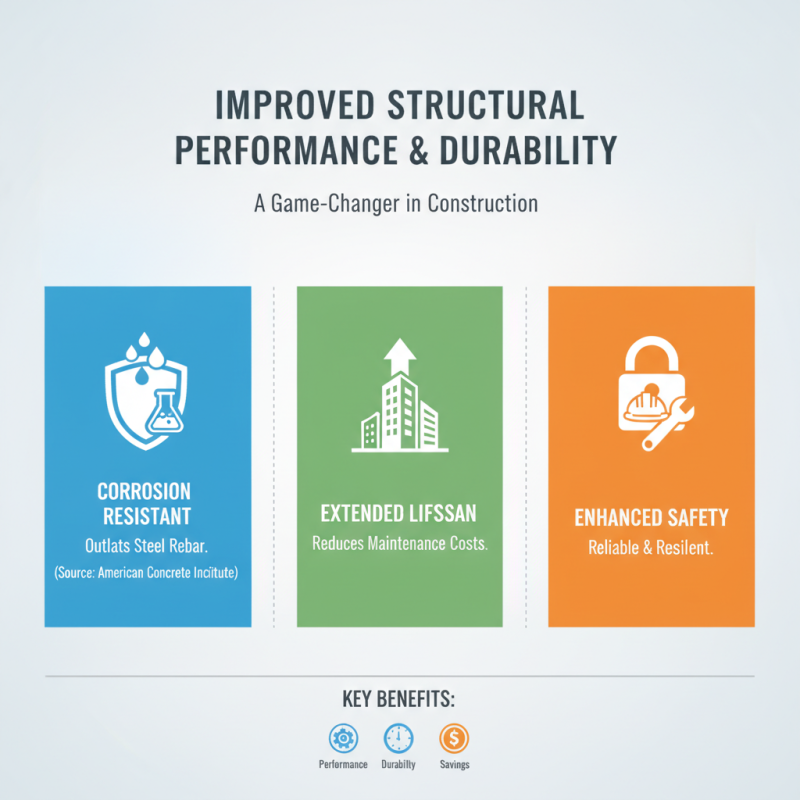
Glass fiber rebar has emerged as a game changer in the construction industry. Its improved structural performance and durability are vital for various applications. According to a report from the American Concrete Institute, structures using glass fiber rebar can withstand corrosion better than traditional steel rebar. This resistance extends the lifespan of structures, minimizing maintenance costs and enhancing safety.
One study indicates that glass fiber rebar exhibits tensile strengths exceeding 120,000 psi, making it suitable for high-stress environments. The lightweight nature of glass fibers also simplifies handling and installation. This can lead to reduced labor costs and construction time, benefiting project timelines. However, some engineers still emphasize the need for careful assessment. Installation techniques and environmental conditions play a crucial role in performance.
**Tip:** Consider conducting a cost-benefit analysis before switching to glass fiber rebar.
Integrating glass fiber rebar isn't without challenges. Some builders find it difficult to bond with concrete under certain conditions. Understanding compatibility is essential for optimal performance. Proper training on installation practices can mitigate potential issues.
**Tip:** Evaluate training resources available for your team before beginning a project.
Cost-Effectiveness in Long-Term Construction Projects
The use of glass fiber rebar in long-term construction projects can enhance cost-effectiveness significantly. Research indicates that structures utilizing glass fiber rebar can reduce maintenance costs by up to 40%. This is primarily due to its high corrosion resistance compared to traditional steel rebar. Over time, this translates into substantial savings, as fewer repairs are needed.
Moreover, glass fiber rebar is lighter and easier to handle. A typical glass fiber rebar weighs 70% less than steel rebar, which can lead to reduced shipping and labor costs. According to industry studies, this lightweight characteristic can speed up installation times by approximately 30%. However, engineers must ensure proper handling protocols, as the material can be less forgiving during transportation.
While there are many benefits, challenges remain. Early adopters sometimes faced issues with bonding and concrete interface. Proper surface treatment is essential to optimize performance. Continuous research aims to address these aspects, ensuring long-term reliability. Exploring these factors allows the construction industry to maximize the advantages of glass fiber rebar while identifying areas for improvement.